
GoFish! Collective Podcast No.1 — 5th February 2025
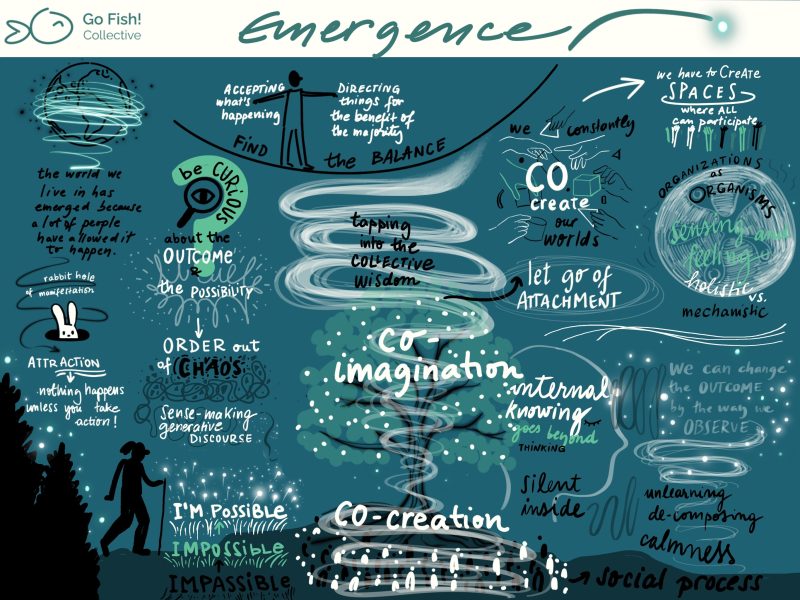
In the inaugural episode of the GoFish! Collective podcast hosts Kat, Brett, François, and Joanna explored the concept of emergence and its intricate relationship with control, curiosity, and safety. The conversation was a deep dive into the philosophical, psychological, and organisational dimensions of emergence, offering varied perspectives on how systems, individuals, and societies navigate this ever-evolving dynamic.
Emergence and Control
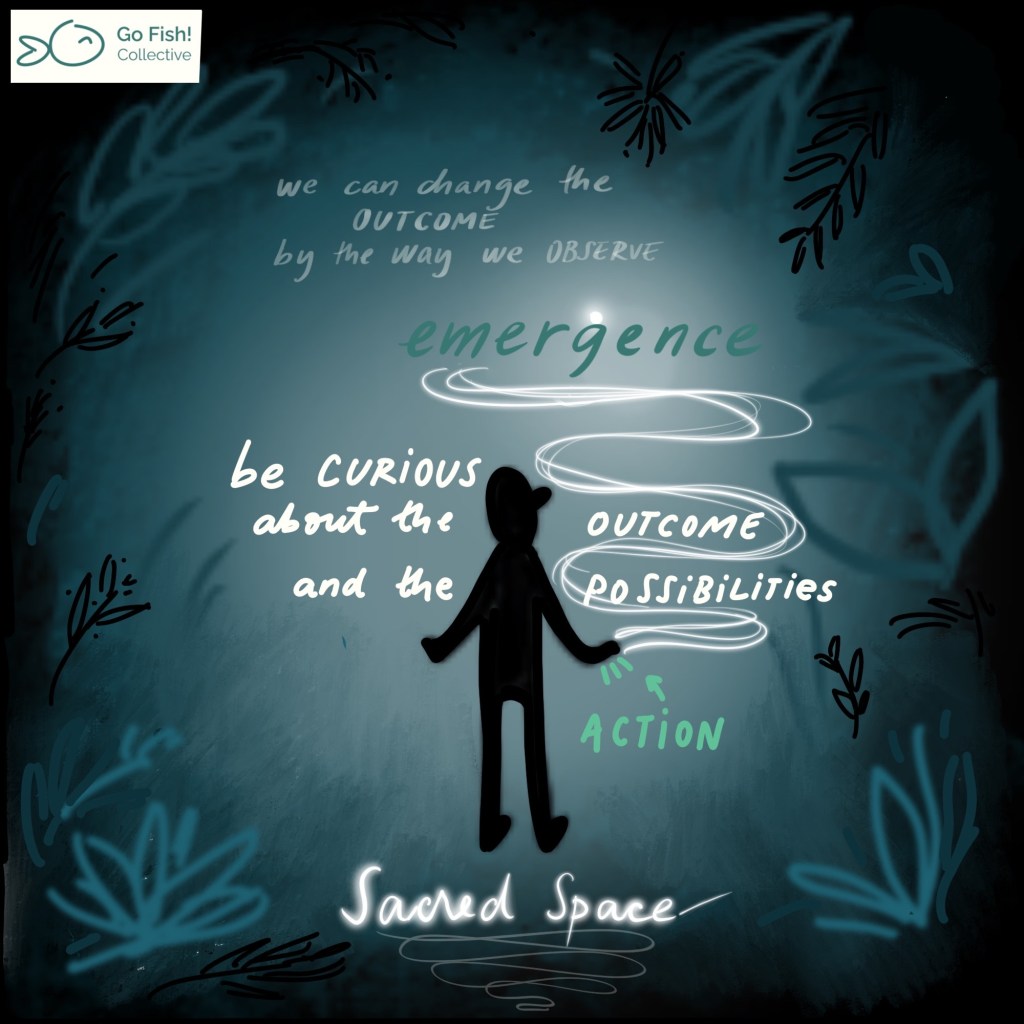
Brett opened the discussion by questioning the perceived opposition between emergence and control. Is complete laissez-faire truly the path to an organic, self-sustaining system, or does some level of guidance inevitably shape what emerges? He argued that the world we live in has emerged largely due to the actions—or inactions—of the majority, raising the question of whether emergence can be both spontaneous and directed.
François took a methodological approach, defining emergence as a social construct that arises through self-organisation and collective intelligence. He emphasised that emergence is often mistakenly equated with passive allowance, whereas true emergence requires deliberate inclusive space for dialogue and co-creation. Without this intentional framework, control mechanisms—whether explicit or subtle—can stifle authentic emergence.
Safety and the Role of Trust
Kat brought another dimension to the discussion by linking emergence with safety. Reflecting on a personal experience while walking in the forest, she illustrated how a sense of security allows one to embrace uncertainty. Without an inherent safety net, true exploration and openness to emergence become challenging. This perspective highlighted how, on both individual and societal levels, the presence or absence of safety shapes our willingness to allow things to emerge.
Brett built upon this by exploring how fear often leads to the need for control. The conversation naturally progressed into an analysis of psychological safety in organisations, where a lack of trust discourages participation and stifles innovation. François further underlined that for genuine emergence to occur, the environment must be inclusive and free from coercion, ensuring that all voices have space to contribute.
Curiosity as a Catalyst for Emergence
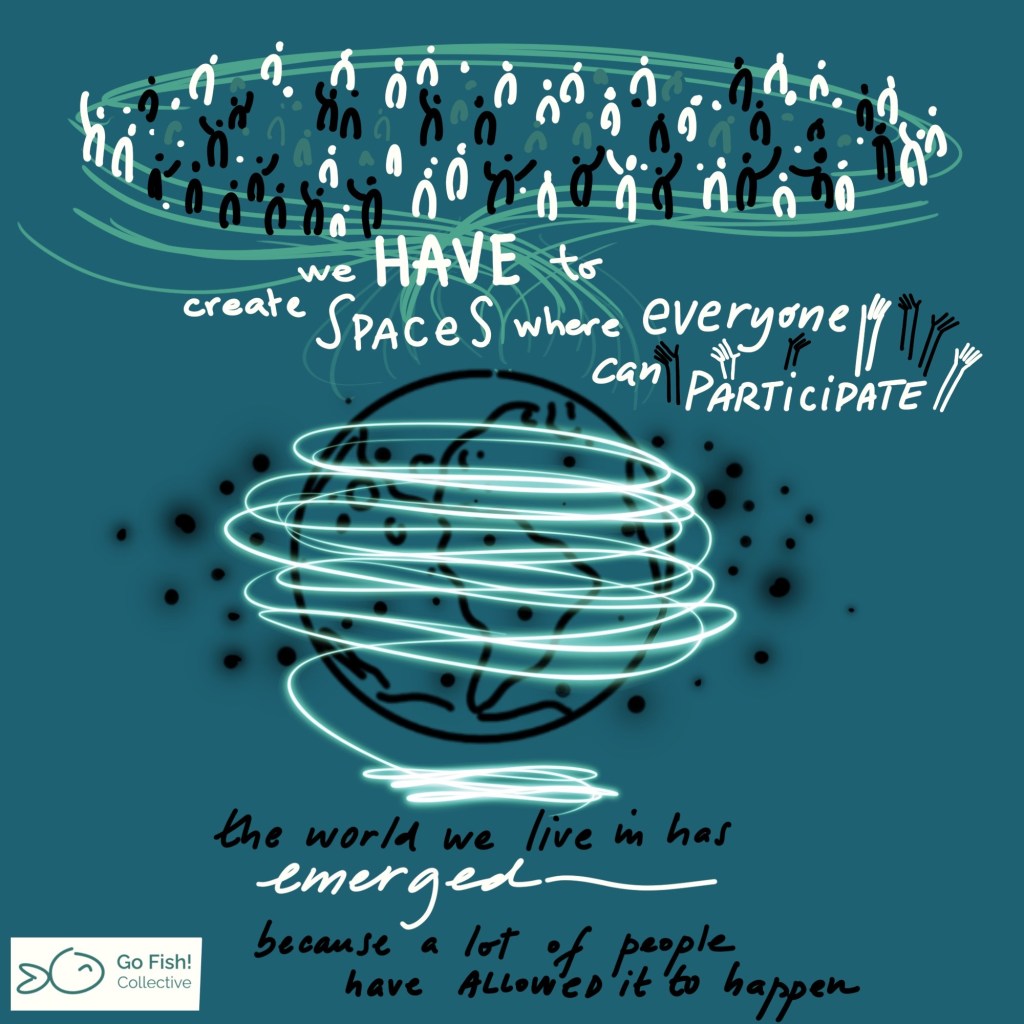
Another key theme was curiosity. Joanna shared a story from her travels, where a spontaneous deviation from a planned route led to an unexpected and enriching experience. This anecdote underscored how curiosity acts as a gateway to emergence, fostering openness to new perspectives and experiences.
Joanna also recalled the concept of ‘unlearning’—the idea that true emergence requires shedding preconceived notions and embracing a state of receptivity. She argued that much of what we consider ‘planning’ or ‘designing the future’ is often a projection of past experiences rather than a genuine openness to new possibilities.
The Social and Organisational Implications of Emergence
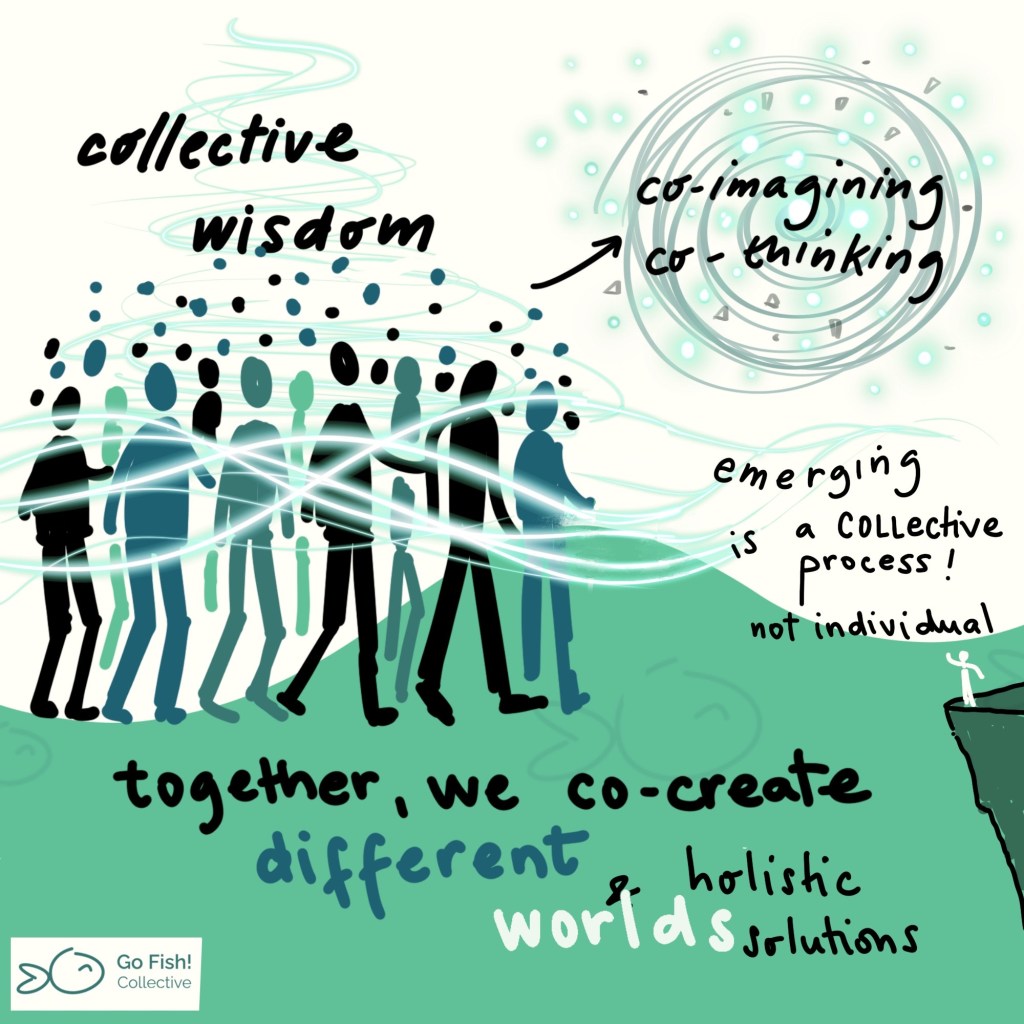
As the discussion deepened, François distinguished between diagnostic and dialogic approaches to change. While diagnostic methods seek to ‘fix’ perceived problems based on a static worldview, dialogic approaches embrace continuous co-creation. The latter, he asserted, is where true emergence thrives, as it allows collective intelligence to shape evolving realities.
Brett shared an example of a leadership retreat where an organisation attempted to implement emergent strategy. Despite initial enthusiasm, the founder ultimately reverted to a top-down approach, effectively stifling the energy that had been built. This case exemplified how the illusion of participation can often be a mask for retained control.
Final Thoughts: Letting Go for True Emergence
As the conversation drew to a close, the group reflected on the paradox of control and emergence. François pointed out that most social constructs are rooted in imposition rather than co-creation, which is why many attempts at change management fail. Kat admitted to struggling with letting go of control, recognising both its comfort and its limitations.
Joanna closed with an insightful reflection on the subjectivity of safety and its connection to consciousness. She suggested that rather than measuring or enforcing a sense of security, we should focus on fostering higher levels of awareness, which naturally lead to environments where emergence can flourish.
The discussion left listeners with a thought-provoking question: Can we create conditions that encourage emergence without imposing control? And if so, how do we cultivate the trust, curiosity, and collective participation necessary to allow it to thrive?
Stay tuned for the next episode of GoFish! Collective as we continue to explore the intersections of creativity, leadership, and emergent thinking.
Authored by Kat, Brett, François, and Joanna. Images by Bianca Gainus.
 GoFish! Collective