
The article presents a dialogue among the GoFish! Collective on the theme of control and its impact on emergence and leadership. Participants reflect on their experiences with control, its roots in fear, and the importance of shifting perspectives from an ego-centric to an eco-centric approach. They advocate for allowing diverse perspectives and embracing uncertainty for better outcomes.
Tag Archives: sociocracy
Distributed Leadership anchored in the Power to Object

The blog post discusses the Japanese lean manufacturing practice known as ‘Andon’, where each employee is empowered to stop the production line if they encounter a quality or safety issue. The post likens this practice to ‘Sociocracy’, an organizational structure that enables all members to have equivalence in decision-making, promoting collective wisdom to refine decisions and overcome objections. The author argues that replacing opposition-based democracy with consent-based sociocracy can enable more efficient and inclusive decision-making in organizations.
Lean, Agile, Teal …. how does sociocracy fit in?
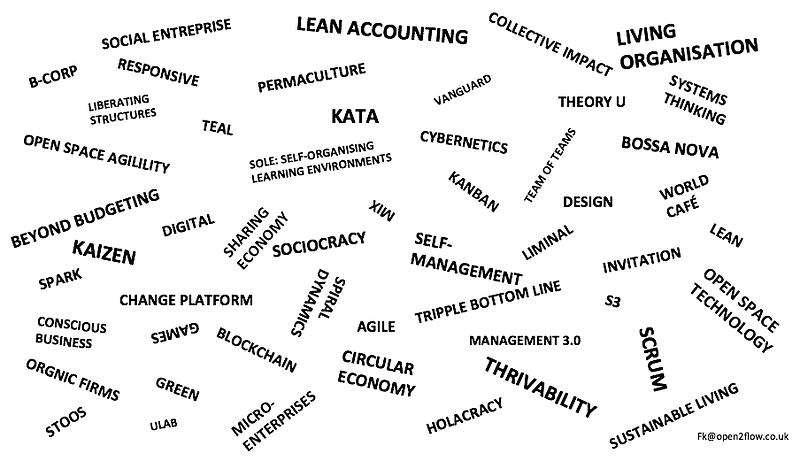
The sociocratic approach emphasizes human-centeredness and forming communities where everyone’s voice is respected. While technically about governance, decision-making, and distributed leadership, sociocracy mirrors the focus on human development central to other methodologies like Lean and Agile. However, the digital future presents a mechanistic approach – contrasting with the organic, emergent thinking of sociocracy. Despite this, sociocracy contributes to a vision of workplaces as collaborative environments of self-development, learning, and joy. Therefore, diversity of methods should coexist, providing balanced ingredients toward creating human-first workplaces.
Is Hierarchy Toxic?

The discussion on hierarchy in organizations is contentious, with some emphasizing its necessity for order while others decry its negative impact. Despite its potential for toxic power dynamics, hierarchy itself is not inherently harmful. A reimagined approach, exemplified by grassroots neighborhood parliaments, highlights hierarchy’s potential as a bridging tool for empowered decision-making and community service.
 GoFish! Collective